

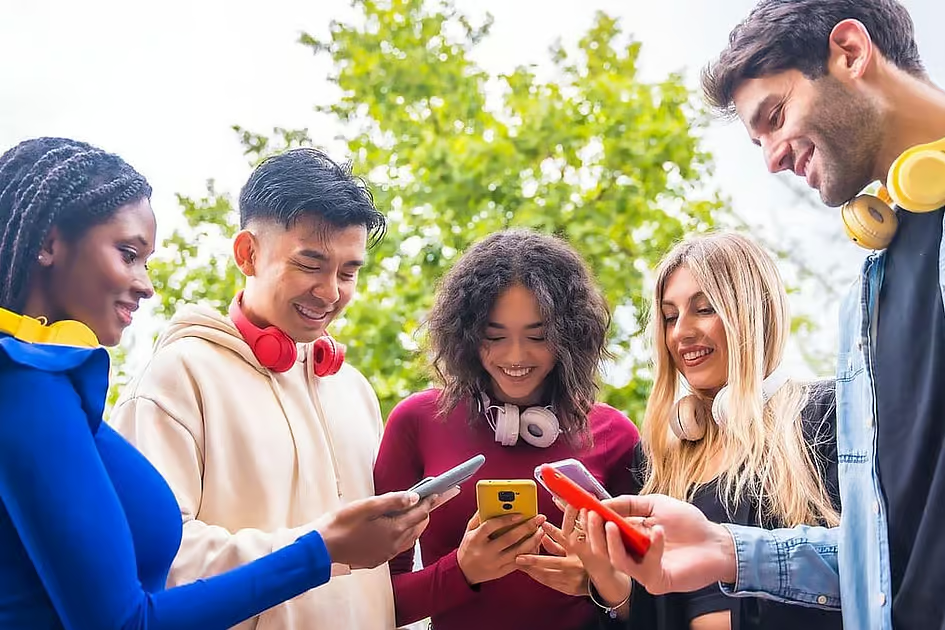
For many artists today, the goal is no longer to top the charts first; it’s to go viral first. A song that catches fire on TikTok or YouTube Shorts can propel an unknown musician to millions of streams, sold-out concerts and even major label deals.
But as governments around the world introduce stricter rules around children’s access to social media, the industry is beginning to ask a new question: what happens if artists lose access to part of the audience they’ve come to depend on?
The discussion comes as the UAE announced plans to ban children under the age of 15 from accessing social media, a move aimed at strengthening online child safety. While the policy is designed with young users in mind, industry experts say it also raises broader questions about how artists break through, how songs become hits, and how concerts are marketed in an increasingly digital world.
Stay up to date with the latest news. Follow KT on WhatsApp channels.
For years, short-form video platforms have become the launchpad for new music. Viral dance trends, comedy skits, and cinematic edits have helped unknown artists reach millions of listeners, often before their songs ever appear on streaming charts.
“The shift has been fundamental,” said Artem Shargin, co-founder and chief operating officer of UAE-based independent music label 0to8.
“A teenager today lives inside a constant stream of video. They watch edits on TikTok and YouTube Shorts, then send the same clips to friends on Discord or into group chats. Music travels with the video.”
He said recommendation algorithms have become the primary source of music discovery for many young listeners, with radio stations and editorial playlists increasingly amplifying songs that have already gained momentum online.
According to Shargin, music discovery has also become more participatory, with users driving songs’ popularity through their own content.
He pointed to 0to8 artist udiennx, whose track Vision gained traction after car enthusiasts began using it in cinematic videos featuring Porsche and Mercedes-AMG vehicles.
“Over thousands of videos, the song became part of the car community’s identity,” he said. “Porsche noticed and used the track in its own campaign. Today, Udiennx has close to seven million monthly listeners on Spotify.”
Artists will follow audiences
Despite concerns about tighter regulations, Shargin does not believe young audiences will simply disappear from online spaces.
“I don’t actually expect younger audiences to spend less time online,” he said.
“Audiences are like energy. They never disappear; they change form. If access to one platform gets restricted, teenagers move to whatever channel comes next, and artists follow them there.”
Instead of depending on a single platform, he believes artists and labels will need to diversify their marketing strategies and strengthen direct relationships with fans through streaming services, messaging channels and creator communities.
“I don’t expect short-form content to disappear,” he said. “The artists who last are the ones whose music people want to share. Platforms change; that instinct doesn’t.”
He also warned against viewing virality as the ultimate goal.
“A viral moment is often the fastest way for an unknown artist to get discovered,” he said. “The real work is converting that attention into loyal listeners and a community that stays after the trend fades.”
What about concerts?
The impact could also extend beyond music discovery into the live entertainment business.
Cosmin Ivan, CEO of Platinumlist, said social media plays an important role in creating excitement around concerts and festivals, but it is not necessarily what convinces people to buy tickets.
“Social media is superb at the top of the funnel,” he said. “It creates the moment and the sense that an event is happening.”
However, data from Platinumlist suggests that around 40 per cent of users discover events through friends rather than social media algorithms.
“Word of mouth still outperforms the feed,” Ivan said.
Rather than seeing regulations as a threat, Ivan believes they should encourage organisers to rethink how they engage audiences.
“The regulation is a legitimate step on child safety, and the industry’s job is to adapt to it responsibly,” he said.
He argues that organisers should invest more heavily in first-party communication channels, including apps, email newsletters, membership programmes and opt-in notifications, instead of relying almost entirely on third-party platforms.
“The rethink is overdue,” he said. “It pushes the industry back towards owning the audience relationship directly.”
Fans will still find live music
Ivan does not expect demand for concerts to decline if social media habits change.
“The appetite of young people to be in a room with an artist they love, with their friends, is not something a change in marketing channels dampens,” he said.
“What changes is the route to the ticket, not the desire for it.”
He believes the platforms that succeed will be those with direct relationships with audiences rather than those dependent on constantly changing algorithms.
“The ones that will thrive are the ones that already speak to their fans directly,” he said.
As governments continue debating online safety, the music industry may find itself adapting once again. But if the experts agree on one thing, it is that while platforms evolve and regulations change, people’s desire to discover new music and experience it live is unlikely to disappear. It will simply find a new path.
Source: Khaleej Times