

As organizations across Saudi Arabia move from AI pilots to broader deployment, SAP believes the next phase of adoption will be defined not by access to AI models alone, but by how effectively intelligence is integrated into business processes, supported by trusted data and governed at scale.
This shift comes at a time when confidence in AI investments remains high across the Kingdom. According to recent SAP YouGov.com research, 91% of organizations say their AI initiatives are meeting or exceeding expectations, while 59% report that AI investments are prioritized strategically and enterprise-wide. These findings suggest that many organizations are increasingly treating AI as a long-term business capability rather than a standalone technology initiative.
Through its Autonomous Enterprise vision, SAP is positioning AI as an integral part of business operations, working within established processes, governance frameworks, and organizational priorities. The approach is designed to help organizations move beyond isolated use cases and apply AI in ways that support both decision-making and execution.
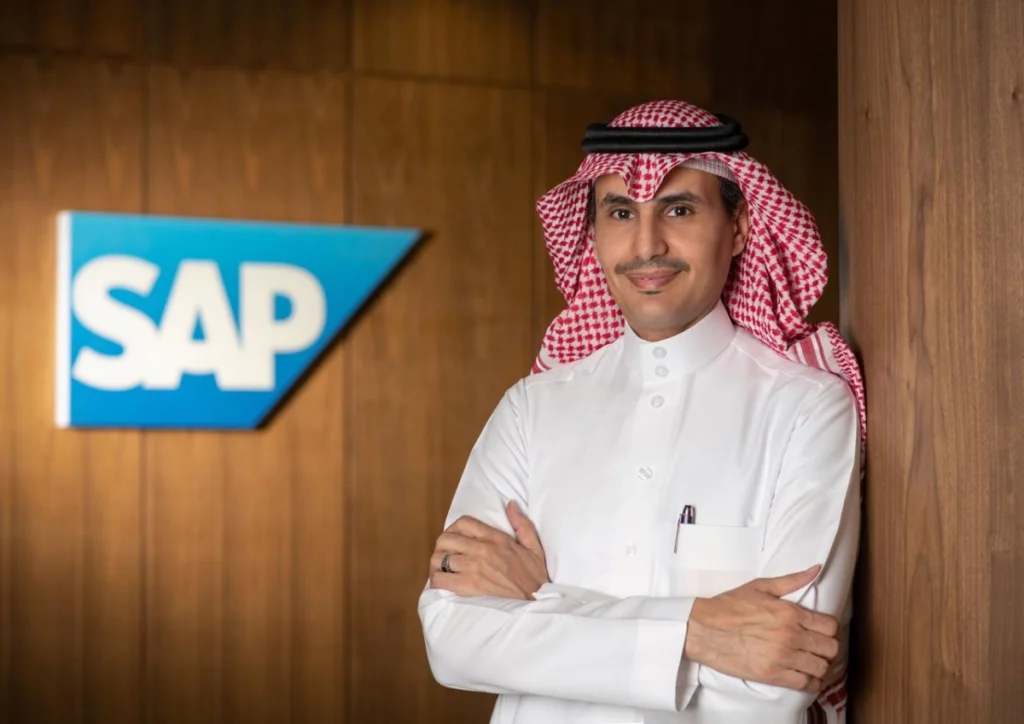
Ahmed Al-Faifi, Managing Director and Senior Vice President of SAP Middle East & Africa North, said: “Saudi Arabia is moving quickly from AI ambition to enterprise execution, and this creates a clear leadership challenge for organizations across the Kingdom. Agentic AI can deliver significant value, but only when it is grounded in trusted business data, governed processes, and clear accountability. This is the foundation of the Autonomous Enterprise, where people set the direction while AI helps coordinate and execute work with transparency, control, and measurable business impact.”
According to SAP, organizations that successfully scale AI will increasingly need to focus on five key factors to move AI from isolated projects into day-to-day operations.
Manos Raptopoulos, Global President Europe, APAC, Middle East & Africa, and a member of the Extended Board of SAP SE, explains that organizations scaling AI successfully must focus on more than technology alone. In his view, governance, trusted data, workforce readiness, customer impact, and strategic alignment will be the factors that determine whether AI delivers lasting business value.
Raptopoulos said: “AI is no longer evaluated on novelty. It is evaluated on precision, governance, scalability, and business impact. The winners will not be those with the most AI features. They will be those who treat AI as a core operating layer, governed like a workforce, grounded in trusted data, tailored to employees and customers, and calibrated to the realities of their industry.”
Al-Faifi said these priorities are particularly relevant for organizations in Saudi Arabia as they expand AI initiatives across core business functions and prepare for more autonomous forms of enterprise execution. Organizations that successfully scale AI will increasingly need governance frameworks for AI agents, trusted and consistent business data, workforce readiness, and clear accountability mechanisms.
For Saudi organizations, these considerations are becoming increasingly important as Vision 2030 accelerates investment across sectors, including manufacturing, logistics, tourism, energy, and digital government. As investment continues across these sectors, SAP believes organizations will increasingly focus on AI that can operate within existing business processes, use trusted data, and deliver measurable outcomes while maintaining appropriate oversight.
Source: Saudi Gazette