

VMRay, a developer of advanced malware analysis and threat detection solutions, together with its regional distribution partner Shifra, recently announced its participation at GISEC Global 2026.
Taking place from September 16–18, 2026, at the Dubai Exhibition Centre, Expo City Dubai, the event serves as an open forum for VMRay to analyse the structural changes in modern cyber risk. The company encourages organisations to look beyond static compliance and instead build defences that adapt directly to the urgent, shifting realities of the threat landscape.
“Defenders face an environment where evasive, novel and highly targeted threats easily bypass traditional network perimeters”, said Dr. Carsten Willems, CEO of VMRay. “In this setting, knowing that something is malicious is where the work begins, not where it ends. A verdict answers whether a threat is real, but not what it does, and it is that understanding, not a checkmark, that lets teams respond and build intelligence they can trust. At GISEC Global 2026, we intend to help enterprises look past surface-level reassurance and transition toward deep, behavioural resilience that addresses risks as they actually exist”.
Navigating an Environment of Speed, Scale, and Orchestration
For modern security teams, the primary operational challenge has fundamentally shifted. Across the Middle East, organisational vulnerability is no longer driven solely by isolated, novel exploits. Rather, the challenge stems from the speed, scale, and coordinated orchestration of modern delivery mechanisms. AI-assisted threat actors, decentralised delivery pipelines, and hyper-targeted tactics mean that malicious files, links, and infrastructure now penetrate enterprise ecosystems faster than conventional human and automated controls can interpret them.
This systemic acceleration changes the defender’s core question. The priority is no longer just discovering whether an artifact is malicious but understanding what it actually does—its full execution path, its external infrastructure, and its operational intent. Gaining this deep behavioural clarity is what allows security teams to construct precise threat intelligence tailored to their unique infrastructure, moving away from a reliance on generic, outdated indicators.
The multi-stage realities of modern phishing
The transformation of phishing underscores why traditional detection models struggle. A threat that once materialised as a single suspicious email has evolved into an intricate, multi-stage delivery path. Security teams now routinely encounter password-protected attachments, QR codes routed through multi-layered redirection chains, and fragmented payloads engineered to appear benign at every individual inspection point.
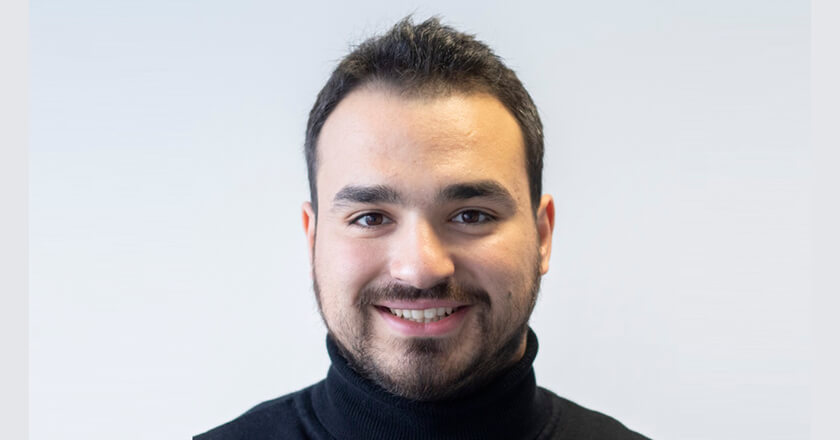
“When threats are designed to evade surface-level filters at scale, a simple ‘clean or malicious’ flag leaves critical gaps”, explained Hüseyin Fatih Akar, Security Product Manager at VMRay. “Defenders need clear insight into the exact mechanics of an attack—its specific behaviours, target objectives, and evasion protocols. By providing stable, evasion-resistant analysis, we help organisations turn complex, obscured technical data into clear, actionable context for their daily operations”.
Inside the booth: Clear signal for the security operations centre
At Stand D120 in Hall 6, VMRay and Shifra will demonstrate how advanced malware and phishing analysis, combined with targeted threat intelligence—including the proprietary UniqueSignal feed—can reduce operational noise for defenders. The showcase will focus on a fundamental operational principle: automation within Security Operations Centres (SOC) and Incident Response (IR) workflows is only as reliable as the underlying analysis feeding it. Visitors will explore how removing environmental noise and analytical blind spots allows security teams to make confident, repeatable operational decisions.
Image Credit: VMRay
Source: Tahawul Tech