

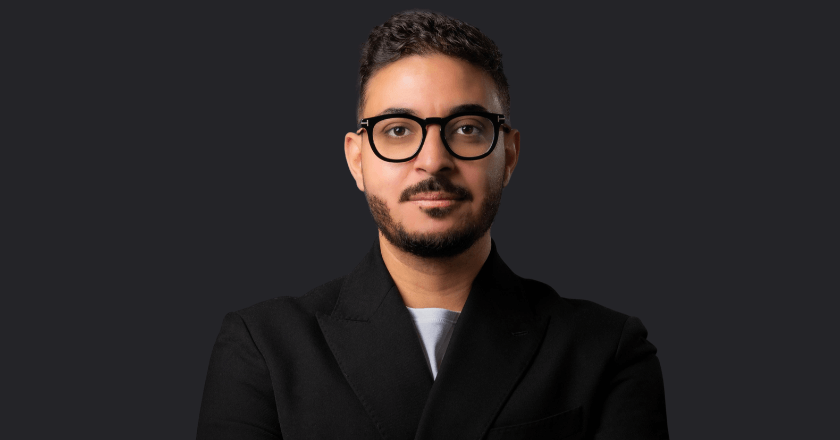
TII’s Dr Chaouki Kasmi explains how TACTICAAI connects multi-domain intelligence through AI while keeping human judgement firmly at the centre of consequential decisions
Modern operations rarely unfold within a single domain. An event on the ground may be connected to activity observed through satellite imagery, infrastructure sensors, communications networks, or other operational sources. For decision-makers, the challenge is not simply accessing these individual streams of information, but understanding how they relate quickly enough to determine what requires attention.
Artificial intelligence can help manage this complexity, but greater machine capability should not mean removing people from consequential decisions. TACTICAAI is built around a human-in-the-loop approach to decision intelligence, combining Earth Observation, geospatial intelligence, operational information, and AI-powered reasoning to help users understand situations spanning multiple domains while keeping human judgment central to the response.
As organisations become more connected, specialised systems provide increasingly detailed views of different parts of the operating environment. Defense organisations, emergency services, infrastructure operators, and security agencies may each have access to valuable information, yet technology and organisational boundaries can prevent those insights from being understood together. The result is often a fragmented picture that operators must manually reconcile before they can determine whether separate developments are connected.
Multi-domain decision intelligence addresses this gap by bringing relevant information into a common context. AI can correlate inputs, identify relationships, and highlight developments that warrant closer examination, reducing the time personnel spend moving between systems and allowing them to focus on the implications for the wider operation.
Consider a disruption affecting geographically dispersed infrastructure. Satellite observations may indicate an environmental change while sensors report unusual conditions across individual assets and operational systems detect changes elsewhere in the network. Viewed independently, none may fully explain the situation; considered together, they may reveal an emerging risk that requires attention.
TACTICAAI applies AI-powered reasoning to establish these relationships and present them within a broader operational picture.
The technology supports interpretation and prioritisation, while experienced personnel determine what action, if any, should follow. This creates a clear division of responsibility between what AI can help manage and where human judgment remains essential.
Where AI Supports, Where Humans Decide
Connect- AI
Brings together information from Earth Observation, geospatial intelligence, sensors, and operational systems to create a more complete picture.
Interpret- AI
Identifies relationships across different inputs and highlights developments that may require closer attention.
Assess- Human
Applies mission context, experience, available resources, and operational priorities to determine what those developments mean.
Decide-Human
Retains authority and accountability for consequential actions.
This distinction becomes increasingly important as decision systems grow more sophisticated. Human-in-the-loop design cannot be reduced to an approval step at the end of an automated process; operators need sufficient visibility into how an assessment was formed so they can question it, introduce additional context, and determine whether it reflects operational reality.
For organisations, the opportunity is to use each capability where it adds the greatest value. Machines can process information at a scale and speed that would be difficult to achieve manually, while people contribute institutional knowledge, strategic awareness, and responsibility for trade-offs. Together, they can help organisations navigate complex situations without distancing decision-makers from the environments they are responsible for managing.
As operations become increasingly interconnected, the strongest decision systems will not be those that attempt to remove people from the process. They will be those that use AI to make complexity manageable while giving operators the context needed to exercise informed judgment. TACTICAAI reflects this model by connecting information across multiple domains and supporting machine-scale interpretation while preserving human authority over what happens next.
This opinion piece is authored by Dr. Chaouki Kasmi, Co-Founder, TACTICAᴬᴵ and Chief Innovation Officer, TII.
Source: Tahawul Tech