

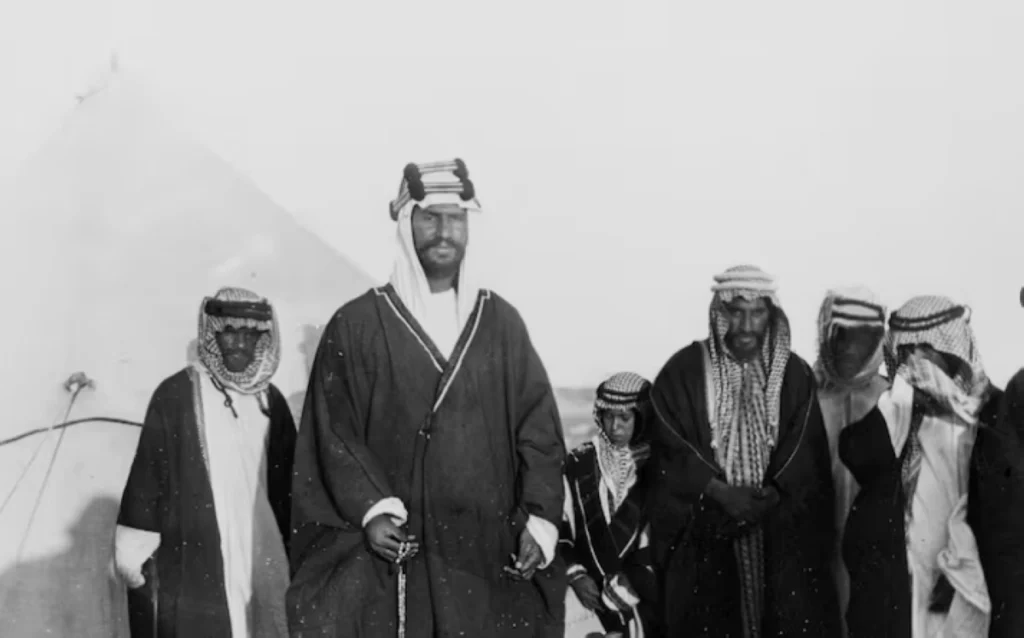
RIYADH — Long before Sept. 23, 1932, before the royal order and before the name Kingdom of Saudi Arabia appeared on the map, the story began with a return to Riyadh.
It was Jan. 15, 1902 — the fifth of Shawwal 1319H — when King Abdulaziz bin Abdulrahman Al Saud recaptured the city in an event that the King Abdulaziz Foundation for Research and Archives, known as Darah, describes as one of the pivotal events in the history of modern Saudi Arabia.
The significance of that day would extend far beyond Riyadh. It marked the beginning of the unification phase that ultimately led to the emergence of the modern Saudi state.
For Abdulaziz, however, the road back to Riyadh had begun years earlier.
He had left the city in 1891. During the years that followed, and particularly while living in Kuwait, the idea of returning remained with him.
Historical accounts cited by Darah describe a young Abdulaziz leaving his home at night for an isolated place in the desert, away from the settlement, where he would think about how Riyadh could be recovered.
It was an ambition that demanded patience as much as courage.
An initial attempt came around the time of the Battle of Al-Sarif in 1901. It did not result in the recovery of the city, but months later Abdulaziz set out again with a small group of loyal men and headed toward Riyadh.
This time, the outcome would change history.
The recapture of the capital was not the end of the mission. It was its beginning.
From Riyadh, Abdulaziz embarked on a much larger undertaking: bringing together territories, towns, tribes and communities across a vast and difficult geography.
The process would unfold over nearly three decades.
It required more than territorial expansion. As the areas under Abdulaziz’s leadership grew, so too did the responsibilities of government.
Even the earliest administrative structure in Riyadh reflected that evolution.
Darah records that the Royal Court began after the recapture of the city as a limited administrative nucleus. A small number of clerks and assistants handled correspondence, read petitions and followed matters involving the treasury, hospitality and protocol.
By 1913, those functions were already becoming more specialized as the responsibilities of the emerging state expanded.
The story of unification was therefore also becoming a story of state-building.
Government had to reach farther. Communications had to improve. Security had to be maintained. Institutions had to develop. And communities separated by immense distances had to increasingly function within one political entity.
The transformation can be seen in the country’s changing name.
By 1926, the state was known as the Kingdom of Hejaz and Najd and its Dependencies, with Abdulaziz holding the title King of Hejaz and Najd and its Dependencies.
But the process was still moving toward something larger.
According to the Darah guide, residents of cities, villages and desert communities pledged allegiance to King Abdulaziz and shared the goals of unity and stability. As territorial unification matured, calls emerged for the state itself to carry a single name reflecting that unity.
By September 1932, the journey that had begun in Riyadh had reached its defining political moment.
Following consultations and telegrams from different regions supporting a unified name, King Abdulaziz issued Royal Order No. 2716 on Sept. 19.
Four days later, on Sept. 23, the order came into force.
The Kingdom of Hejaz and Najd and its Dependencies became the Kingdom of Saudi Arabia.
Thirty years separated the two defining dates.
Jan. 15, 1902.
Sept. 23, 1932.
One marked the return to Riyadh.
The other gave the unified country its enduring name.
Between them unfolded the making of a state — a journey that began with the recovery of one city and ended with the unification of a Kingdom.
Source: Saudi Gazette