

Artificial intelligence has rapidly moved beyond experimentation into production environments, creating new security, governance and visibility challenges for enterprises. Shadow AI, identity risks, third-party platforms and increasingly automated cyberattacks are placing greater pressure on organisations to strengthen control over users, applications and data.
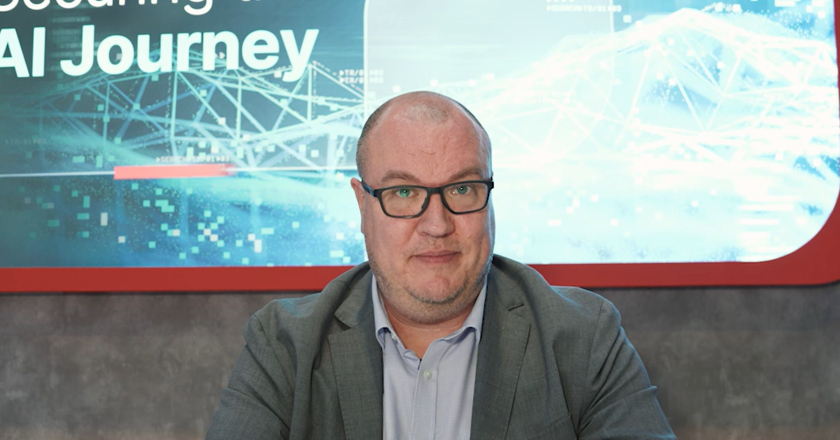
Kalle Björn, Senior Director of Systems Engineering for the Middle East at Fortinet, explains why organisations need integrated security platforms that share threat intelligence and automate response at machine speed. He also discusses the role of zero trust in hybrid workplaces and the importance of securing data flows between IT and operational technology environments.
How is AI changing the cyber threat landscape, and how can organisations defend against AI-powered attacks?
AI adoption has accelerated significantly, with many organisations moving beyond experimentation and integrating AI tools into production environments. This creates risks such as shadow AI, where employees use applications without the organisation’s knowledge or approval. Enterprises need clear governance frameworks, comprehensive visibility and effective controls over how AI tools access and process corporate data.
Cybercriminals are also using integrated AI tools to launch attacks at greater speed and scale. Human-led processes alone cannot respond quickly enough, making AI-supported defence essential. Organisations should deploy integrated security platforms that share intelligence across tools, automate threat response and contain malicious activity before it spreads.
How can AI and automation help security teams improve threat detection and response?
AI can analyse activity across the security environment, identify potential threats and help teams respond at machine speed. This becomes particularly important when malware and other attacks spread faster than human analysts can investigate and contain them.
Security tools must work as an integrated platform rather than operate in silos. Once systems communicate and share threat intelligence, automation can coordinate detection, investigation and response. AI can support this process by analysing alerts, identifying malicious behaviour and initiating appropriate action, enabling security teams to respond much faster.
How should security strategies evolve as organisations adopt more cloud services and hybrid work, and what role does SASE play?
Cloud adoption and hybrid working have expanded the enterprise attack surface and made identity more important to cybersecurity. Organisations must verify that users are who they claim to be, control access to applications and validate the security of third-party platforms hosting business systems and AI tools.
SASE supports this approach by combining networking and security capabilities to protect users regardless of location. Zero trust remains a central element, ensuring that only verified and authorised users can access specific systems, services and data. Continuous identity validation, access enforcement and monitoring help organisations secure distributed workforces and cloud environments.
What are the biggest cybersecurity challenges facing critical infrastructure, and how can organisations strengthen resilience across IT and OT environments?
IT and operational technology environments were traditionally isolated, but growing demand for data and process optimisation has increased connectivity between them. This convergence creates new risks because IT and OT environments often operate with different technologies, security requirements and risk profiles.
Organisations should maintain clear segmentation based on recognised frameworks such as the Purdue Model. A secure demilitarised zone should be established between IT and OT networks to inspect traffic, prevent malicious code from reaching critical systems and enforce controlled access. Continuous monitoring and strict security controls are also essential for protecting data exchanges while maintaining operational availability.
Image Credit: Fortinet
Source: Tahawul Tech