

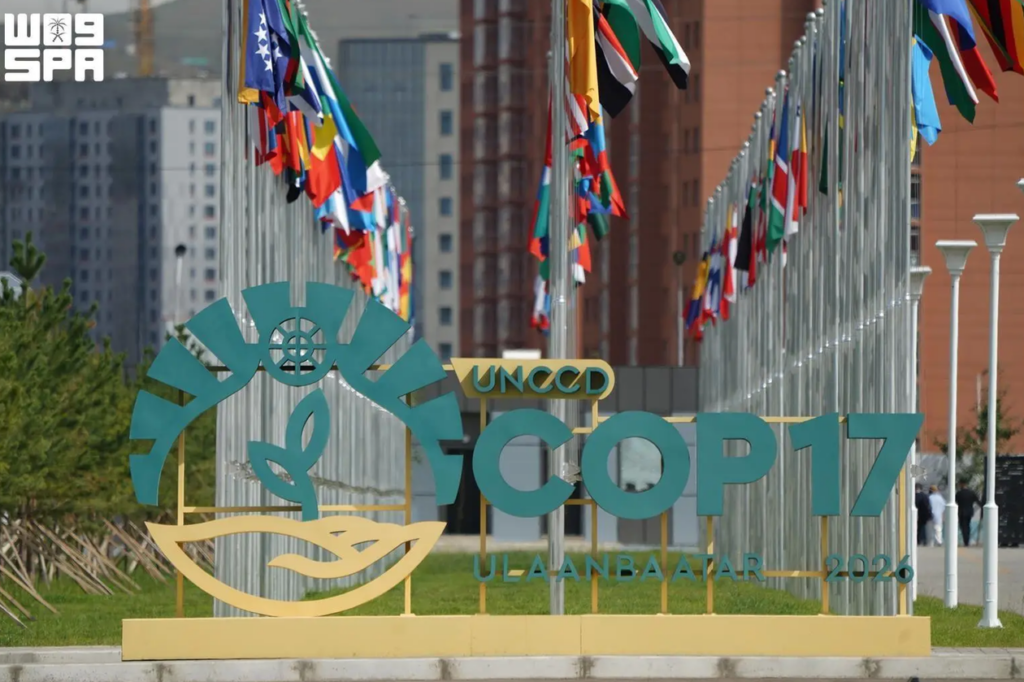
The National Research and Development Center for Sustainable Agriculture (Estidamah) concluded its participation in the 17th Conference of the Parties to the UN Convention to Combat Desertification (COP17) in Ulaanbaatar, Mongolia, showcasing Saudi Arabia’s advanced agricultural solutions for arid environments.
Estidamah presented key research findings on the impact of high-tech greenhouses on agricultural efficiency, notably reducing water consumption to produce one kilogram of tomatoes from 350 liters in open-field cultivation to 4.9 liters, while increasing yield from five to 99 kilograms per square meter.
In crop development, the center highlighted rapid breeding techniques and extended photoperiods that can produce five wheat generations annually, shortening breeding cycles from eight years to three to four years and accelerating the development of climate-resilient local varieties.
The presentations covered precision farming tools utilizing sensors, satellite data, and drones for smart irrigation scheduling, targeted fertilization, salinity monitoring, and early pest and disease detection. Estidamah also demonstrated soilless farming, water recycling, palm waste as a local growing medium, and trials with over 200 local biofertilizers.
Additionally, the center presented vertical farming solutions to scale duckweed cultivation as an alternative sustainable protein source, underscoring Saudi Arabia’s expanding role in advancing sustainable agricultural research, natural resource conservation, and global food security.
Source: Riyadh Daily