

AI is enabling cybercriminals to scale phishing, fraud, reconnaissance and deepfake attacks with greater speed and precision. Governments and enterprises must consequently move beyond reactive security towards intelligence-led defence capable of identifying and mitigating threats before they cause disruption.
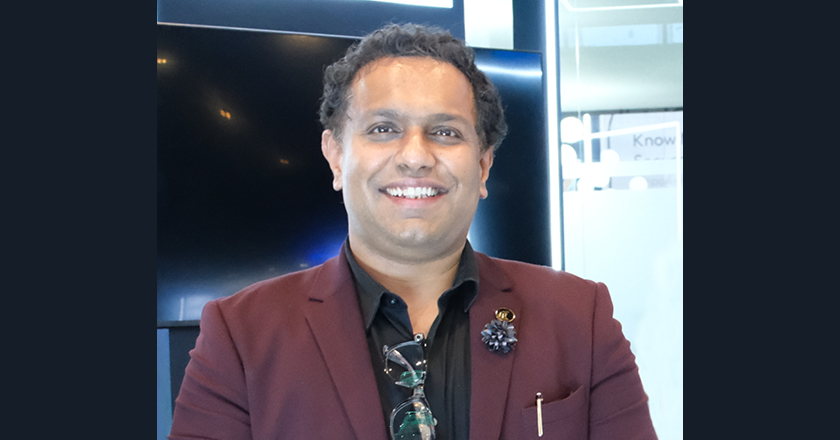
In an interview with TahawulTech.com, Beenu Arora, Co-founder and CEO of Cyble, discusses the company’s collaboration with the UAE Cybersecurity Council, the role of agentic AI in accelerating threat remediation and the governance measures required to build long-term national cyber resilience.
How will the Cyble-UAE Cyber Security Council MoU strengthen the UAE’s cyber defence capabilities?
The MoU between Cyble and the UAE Cybersecurity Council strengthens the exchange of threat intelligence to support more proactive protection across the country. It enables both parties to use timely intelligence to identify emerging risks, strengthen safeguards and respond before threats affect people, organisations or critical infrastructure. The collaboration reflects a shared commitment to protecting the UAE’s digital economy and supporting national resilience. Cyble’s platform collects intelligence from across the internet and feeds it into an agentic environment capable of driving remediation across endpoints and cloud infrastructure at machine speed and scale.
How are attackers using AI to industrialise phishing, fraud and reconnaissance?
Attackers are using AI to collect open-source intelligence, create fake executive profiles and produce highly personalised messages targeting specific employees. This allows them to conduct sophisticated phishing campaigns at far greater speed and scale. Deepfake video and voice scams are also increasing at an alarming rate. Criminals can impersonate trusted individuals to manipulate employees, extract sensitive information or authorise fraudulent activity. AI capabilities are now available to attackers as well as defenders, making these campaigns more convincing and difficult to detect.
What does the shift from reactive to proactive, intelligence-led defence look like for a nation?
Reactive security is no longer sufficient because attacks are becoming more frequent, scalable and sophisticated. Cyber incidents can disrupt power generation, compromise water supplies and affect other essential services, creating serious consequences for society as well as the organisations operating that infrastructure. Intelligence-led defence focuses on identifying indicators of malicious activity and mitigating risks before an attack succeeds. Governments, cybersecurity organisations and technology providers must share intelligence consistently and use it to strengthen national safeguards. Cyble’s collaboration with the UAE Cybersecurity Council demonstrates how public-private cooperation can support this proactive approach.
Looking five years ahead, what will define a nation that is genuinely cyber-resilient?
Cyber resilience will increasingly depend on how effectively governments and enterprises govern AI-based systems. Organisations are adopting autonomous agents to generate insights, make decisions and perform remediation, but greater attention must be given to how those agents operate and whether their actions can be traced. Auditability, traceability and clearly defined guardrails will become critical. Organisations will also need to assess the accuracy, efficacy and error rates of AI systems as they execute assigned objectives. Stronger collaboration between governments, enterprises and technology providers will remain essential because defenders must exchange intelligence and evolve faster than attackers.
Image Credit: Cyble
Source: Tahawul Tech