

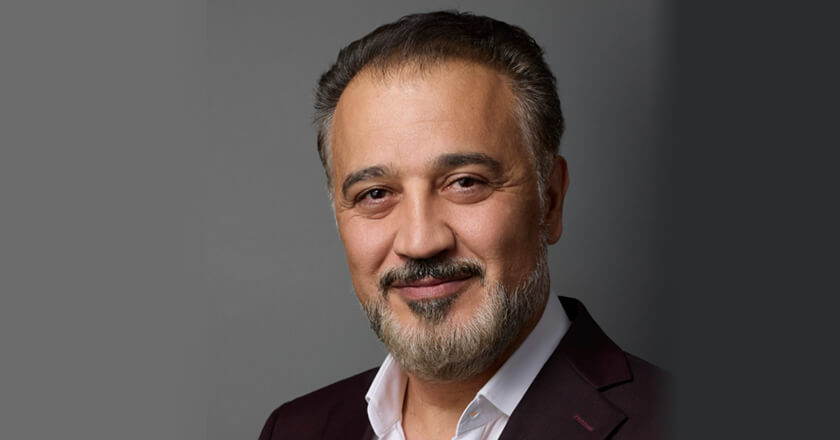
Fayez Abu Awad, Policy Director MENA at GSMA, discusses how AI, advanced connectivity and strategic digital infrastructure investments can accelerate economic transformation across Qatar and the wider Middle East.
1. What role do you expect AI to play in accelerating Qatar’s and the wider region’s shift towards intelligent economies over the next five years?
AI will be one of the defining forces shaping the region’s economies over the next five years but its significance should not be measured by expenditure or adoption rates alone. The proper test is whether it enables an economy to become more productive, more innovative and better able to deploy its human and institutional capabilities.
The region already has considerable momentum. Around 39% of MENA enterprises make advanced use of generative AI, while AI, mobile connectivity and devices are expected to account for nearly 45% of regional digital-transformation spending. Yet investment is only the beginning. The countries that derive lasting value from AI will be those that combine it with sound data governance, trusted regulatory frameworks, advanced connectivity and people who can build, manage and challenge these systems.
Qatar and the region at large also have an opportunity to shape AI according to their own economic and social priorities, rather than remaining principally consumers of technologies developed elsewhere. That means fostering Arabic-language capabilities, supporting solutions relevant to local industries and ensuring that universities, businesses, policymakers and the technology sector work in much closer concert. National planning for an undertaking of this scale demands rigorous coordination and clear strategic direction. International alignment and harmonization will certainly reflect the complexity involved in the national efforts.
AI is ultimately an instrument, not an end in of itself. An intelligent economy is not one that deploys the greatest number of systems; it is one that uses technology to make better decisions, create more valuable services and enlarge human potential.
2. How are advances in 5G, 5G-Advanced, and next-generation connectivity reshaping the way enterprises across the Middle East operate and compete?
The most consequential change is that connectivity is becoming less visible as a technology and more fundamental as an economic capability. Enterprises should not have to organise themselves around the limitations of the network. They should be able to connect assets, operate across locations, launch services and respond to customers with speed and confidence.
That alters the basis of competition. With nearly half of mobile connections in GCC markets already on 5G, advanced connectivity will increasingly be regarded as a basic condition of doing business rather than a distinction in itself. Competitive advantage will come from what enterprises are able to build upon it: more responsive operations, new services, better customer experiences and business models that were previously impractical.
5G Standalone, 5G-Advanced, private networks and newer Internet of Things capabilities can provide organisations with considerable flexibility. But their value will be diminished if each is treated as a separate technology project. The real gains arise when connectivity forms part of a coherent business and operating strategy.
Policy matters here as well. Spectrum availability, licensing and the wider investment environment must keep pace with the demands placed upon networks. In the longer term, the most competitive markets will not simply be those with the fastest networks, but those that combine advanced connectivity with sufficient certainty for businesses to invest, experiment and scale.
3. Which digital infrastructure investments, from data centres to cloud and edge computing, are most critical to the region’s long-term competitiveness?
The region has already demonstrated that it is prepared to invest seriously in digital infrastructure. The next question is more demanding: what sort of economy will that infrastructure enable?
Data centres, cloud platforms, edge computing, fibre, subsea connectivity and advanced mobile networks are all essential components. But installed capacity is not, by itself, a measure of economic success. The more meaningful test is whether these investments make it easier to establish and scale technology businesses, attract international investment, develop local intellectual property, conduct research and retain high-value digital activity within the region.
We therefore need to think about digital infrastructure as an ecosystem rather than a collection of assets. Energy, international connectivity, skills, data governance and regulation are now elements of the same competitiveness equation. A country may possess excellent physical infrastructure and still underperform if access is difficult, talent is scarce or policy fails to evolve with technology.
The policy objective should be to sustain investment while providing the predictability required for long-term decisions. MWC26 Doha, particularly alongside the ITU Plenipotentiary Conference, offers the region an opportunity to move the conversation beyond what has been built and towards the economic and regulatory conditions needed to make full use of it.
4. What are your expectations for MWC Doha 2026, and which trends do you believe will dominate the conversation at the event?
I expect MWC26 Doha to reflect a more mature phase in the technology debate. The conversation is moving beyond enthusiasm for individual technologies and towards the strategic choices they require from business and government leaders.
AI, 5G-Advanced, cloud, cybersecurity and the longer-term path towards 6G will naturally feature prominently. Yet the most useful discussions will not consist of predicting which technology comes next. They will ask where investment is most urgent today, which capabilities must be developed, and what policy and commercial conditions are needed for the next generation of services to emerge.
The co-location with the ITU Plenipotentiary Conference gives the event unusual significance. Bringing the industry and international policy communities together creates the prospect of a more direct exchange between those who build and finance technology and those who shape the frameworks within which it develops.
Skills must also occupy a central place in the discussion. Sophisticated networks and AI infrastructure have little value without people able to operate, secure and apply them productively. The defining question for MWC26 Doha may therefore be not what is the next technology but what decisions must we take now if we are to be ready for it.
5. What should business leaders across the region be doing now to turn these technology developments into measurable growth?
The greatest risk for many business leaders is not moving too slowly; it is attempting to pursue too many priorities at once. AI, cloud, 5G, cybersecurity and automation are all advancing rapidly, and the temptation is to treat every development as immediately strategic. The result can be a crowded portfolio of initiatives with remarkably little transformation.
Leaders therefore need to exercise disciplined selectivity. They should ask where technology can materially improve the economics of the business, strengthen the customer proposition or create a credible source of new revenue. They should also distinguish between capabilities that are fashionable today and those likely to remain important in three or five years.
Technology alone, however, does not transform an organisation. Structures, skills, incentives and culture often move more slowly. If employees do not understand the purpose of a new system, if managers continue to make decisions in the same way, or if incentives reward established behaviour, even excellent technology will have limited effect. Leadership must attend as carefully to organisational absorption as to technological acquisition.
Across MENA, enterprise digital-transformation spending is expected to average around 9.8% of revenues from 2025 to 2030. At that level of investment, discipline is indispensable. Growth will not come from having the longest list of digital initiatives. It will come from making a smaller number of sound choices, supporting them properly, measuring their results and changing course when the evidence demands it.
Image Credit: GSMA
Source: Tahawul Tech