
Close Menu
    Facebook X (Twitter) Instagram
    KSA News TodayKSA News Today
    Facebook X (Twitter) Instagram
    • KSA
    • Business
    • Technology
    • Sports
    • Lifestyle
    KSA News TodayKSA News Today
    • KSA
    • Business
    • Technology
    • Sports
    • Lifestyle
    • Contact us
    Business

    Saturn opposition, meteor showers and planetary encounters to light up October skies

    Editorial TeamBy Editorial TeamOctober 1, 2026
    Share Facebook Twitter Pinterest Copy Link Telegram LinkedIn Tumblr Email
    Share
    Facebook Twitter LinkedIn Pinterest Email


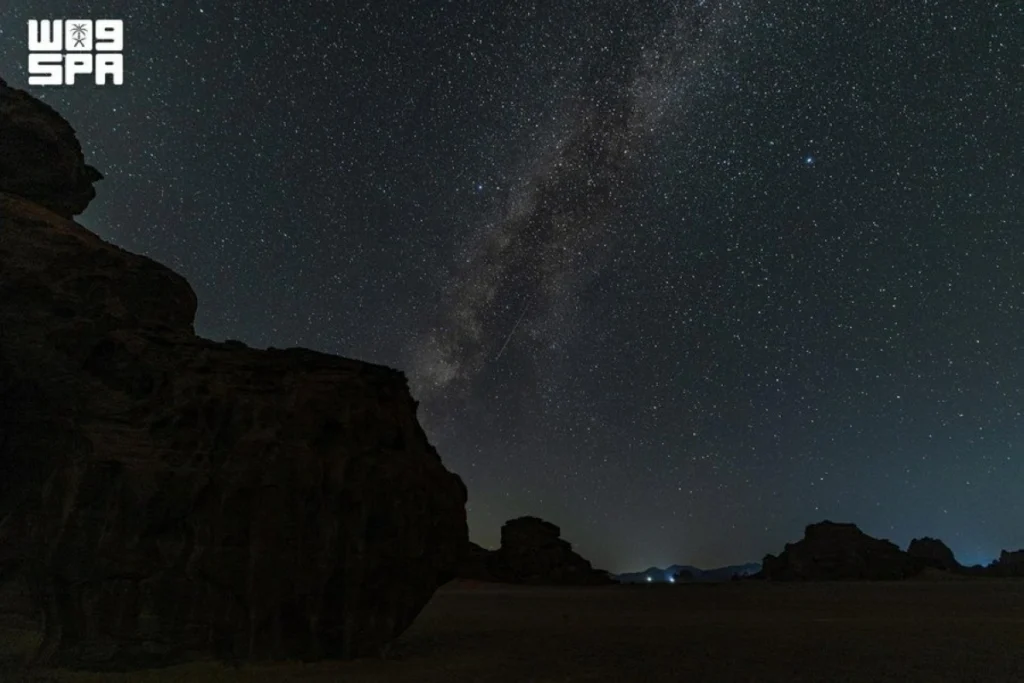
    JEDDAH — The month of October will see several astronomical events, including Saturn reaching opposition, close approaches between the Moon and Mars and Jupiter, and the Orionid meteor shower associated with debris from Halley’s Comet.

    According to Jeddah Astronomical Society President Majed Abu Zahra, Saturn will reach opposition on October 4, rising around sunset and remaining visible throughout the night. At about 1.26 billion kilometers from Earth, it will appear as a bright, yellowish object to the naked eye, while small telescopes can reveal its rings and some of its moons.

    The Moon will approach Mars on October 5 and Jupiter on October 6, with a lunar occultation of Jupiter visible in some parts of the world and a close conjunction seen elsewhere, depending on location.

    Mars will appear among the stars of the Beehive Cluster from October 11–13, visible with binoculars or a small telescope, while Venus will become more visible low above the eastern horizon before dawn toward the end of the month.

    The Draconid meteor shower will be active from October 6–10, peaking on the night of October 8–9 at around five meteors per hour.

    The Orionids will peak on October 21–22, with a theoretical rate of up to 20 meteors per hour, although moonlight may make fainter meteors more difficult to see. The Southern Taurids will also remain active throughout October.

    Other sights include the Pegasus constellation and its Great Square, the Andromeda Galaxy and the Pleiades star cluster, also known as the Seven Sisters.

    The Moon will become full on October 26, traditionally known as the Hunter’s Moon, a heritage name not associated with a specific physical astronomical phenomenon.

    Abu Zahra said most of the events can be observed with the naked eye from dark locations away from light pollution, recommending around 20 minutes for the eyes to adjust to the darkness.

    Source: Saudi Gazette

    Previous ArticleCyberKnight strengthens zero trust ecosystem at GISEC Global 2026 with dual industry awards and more
    Next Article How Riyadh is turning public spaces into a canvas for global art

    Related Posts

    French MEP removes Israeli flag in protest against Gaza genocide

    October 7, 2026

    AHOY Appoints Kamil Hilali as Independent Director

    October 7, 2026

    Search underway for missing crew after drones sink cargo ship in Black Sea

    October 6, 2026
    Latest Posts

    French MEP removes Israeli flag in protest against Gaza genocide

    PNY advances AI factories for enterprise deployment

    AHOY Appoints Kamil Hilali as Independent Director

    Explained: Plague fears in Siberia, what happened and should the public be worried?

    Latest News

    French MEP removes Israeli flag in protest against Gaza genocide

    October 7, 2026

    AHOY Appoints Kamil Hilali as Independent Director

    October 7, 2026

    Search underway for missing crew after drones sink cargo ship in Black Sea

    October 6, 2026
    Facebook X (Twitter) Instagram Pinterest
    • KSA
    • Business
    • Technology
    • Sports
    • Lifestyle
    • Contact us
    2026. All rights reserved.

    Type above and press Enter to search. Press Esc to cancel.