

AI is rapidly reshaping both cyber threats and defence strategies; enterprises are under growing pressure to secure data, identities and emerging AI environments.
QBS Software is highlighting technologies designed to address evolving cybersecurity requirements while strengthening its vendor and partner ecosystem across META and Eurasia at GISEC Global 2026.
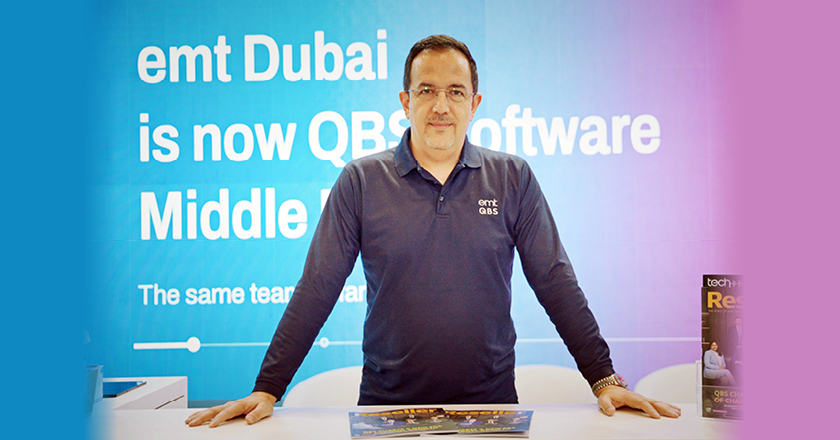
In an interview with Tahawultech.com, Mo Mobasseri, CEO of QBS Software META & Eurasia, discusses QBS Software’s cybersecurity strategy, emerging AI-related risks, its expanding technology portfolio, and the importance of education, simulation, and partner-led implementation in building long-term cyber resilience.
How would you describe the sentiment on the first day of GISEC Global 2026, and what is QBS showcasing at the event?
The new venue has been a positive experience. We have great memories of Dubai World Trade Centre and will certainly miss it, but the new venue brings several advantages. One of the things I particularly like is that the major industry players are gathered together, while the event itself remains highly focused on cybersecurity. This gives us access to a broader and more relevant visitor base.
QBS works with a large portfolio of technology publishers and vendors across EMEA, with some relationships extending globally. At GISEC Global, we are showcasing solutions from several of our key technology vendors, including Exor Lab, Portnox, Vanta, and Fortra, among others.
Our objective is to address the 18 CIS Controls through a comprehensive portfolio of technologies, helping customers strengthen their cybersecurity posture across multiple areas.
How does QBS’s presence at GISEC Global align with its broader cybersecurity strategy for the region?
QBS has two major areas of focus. One is our software delivery platform, which is a unique part of our business and has been developed over many years. Today, we have almost 12,000 publishers on the platform.
Cybersecurity is also one of the strongest areas within the wider group. Globally, we participate in major cybersecurity events, including Infosecurity Europe in London, IT-SA in Germany, GISEC Global in the UAE, and Black Hat in Saudi Arabia.
Our strategy is to maintain a strong presence at these industry platforms and represent the technologies within our portfolio. Our role is to ensure that our partners have access to strong technologies while helping our vendors establish the right market presence.
What emerging cybersecurity threats or trends do you believe will have the greatest impact on enterprises in the Middle East and beyond?
We are seeing two major areas of concern. The first is the traditional challenge of data security. Cybercriminals are becoming increasingly professional and are using more sophisticated technologies. Data security therefore continues to be a major challenge for organisations across the region because data is one of their most valuable assets.
The second major area is AI. AI capabilities are becoming stronger every day, creating tremendous opportunities but also introducing new security challenges. Organisations need greater visibility into how AI is being used, how much they are spending on it, and what security risks may emerge from its adoption.
Our approach is to bring these two areas together by helping customers and partners strengthen traditional data security while also addressing the broader security implications associated with AI.
What innovative technologies or solutions is QBS showcasing at GISEC Global 2026?
We have a global agreement with AWS, which we are preparing to extend into the Middle East as the necessary arrangements are finalised. This is particularly interesting because many of our technology vendors will be available through the AWS platform, making it easier for partners and customers to access and acquire the solutions they require.
We are also showcasing several emerging technologies at GISEC Global, including AI-based email security, security awareness through gamification, and advanced security operations technologies.
Another important focus is AI security. Organisations increasingly need to understand how to secure AI agents and ensure these systems do not introduce additional risks into their environments.
How is QBS collaborating with governments and enterprises to strengthen cyber resilience across key economic sectors?
Our approach begins with education. To support government entities and organisations, we first help people understand the cybersecurity challenges they face. For several years, we have run initiatives such as cyber escape rooms, including engagements with the UAE Cyber Security Council and other organisations.
The second element involves workshops and practical exercises for people involved in business, technology management and implementation. These simulations help participants understand what can happen during a real-world cyberattack and what the potential consequences may be.
The third element is technology. We do not simply provide products. We work to ensure that technologies are properly designed for the customer’s environment, implemented effectively through our partners and supported over the long term.
In some cases, resident engineers are also provided through our partners to support customer environments and help organisations maintain stronger cybersecurity capabilities over time.
What message would you share with the global information security community about QBS’s vision for cybersecurity in 2026 and beyond?
First, I would encourage the global cybersecurity community to experience GISEC Global and the opportunities within this region. It is an exciting market with considerable innovation taking place.
AI also requires significantly greater attention. We are already seeing governments, including the United States and other countries, developing legislation and frameworks around AI.
AI can help organisations improve productivity, performance and security, but people also need to understand how to use it responsibly and securely. Looking ahead, organisations will need to focus not only on how AI can help them, but also on how they can protect themselves against the new risks associated with AI.
Image Credit: QBS Software
Source: Tahawul Tech