

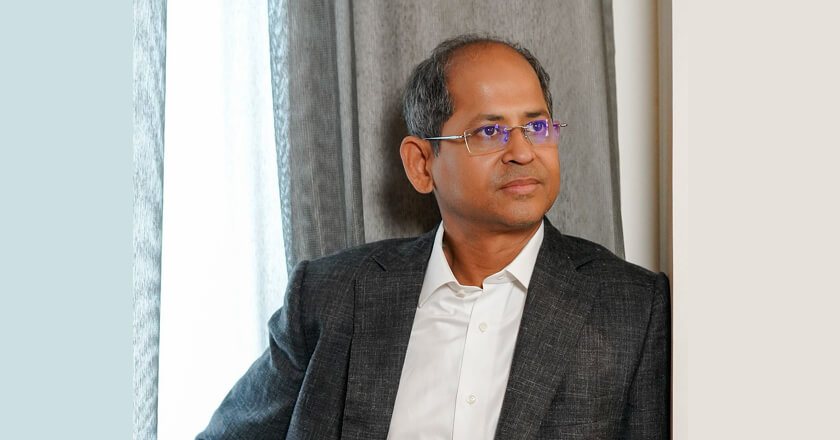
Ramki Jayaraman, Managing Partner at Synarchy Consulting, outlines the importance of sovereign cloud, its dependencies and more in this exclusive op-ed.
For most of the past two decades, MENA built its digital economy by importing capability. Global cloud providers supplied the infrastructure, international software houses supplied the platforms, and enterprises across the region became sophisticated buyers and integrators of technology developed elsewhere. That model served the region well, accelerating digitisation and allowing organisations to leapfrog legacy infrastructure.
But the next phase will be shaped by a different question. Technology leaders across MENA are no longer asking only which technologies they should adopt; they are asking which parts of their digital estate they must control. That distinction is why sovereign cloud has migrated from a technical discussion into the boardroom.
The real issue is dependency, not residency
Sovereign cloud is usually explained in terms of data residency and regulation, and both matter as governments across the region strengthen data protection regimes. Yet compliance is only part of the equation.
The deeper issue is strategic dependency. An organisation can comply fully with every applicable regulation and still find itself exposed if its critical workloads, proprietary data, decision models, cybersecurity controls, or customer intelligence reside within technology environments over which it has limited architectural control.
That exposure was easier to accept when global technology supply chains appeared stable. The assumptions underpinning that calculation have now shifted. Geopolitical tension, export controls, cyber risk, evolving regulation and the concentration of digital infrastructure among a small number of global providers have converted technology choices that once looked operational into questions of enterprise resilience. For a region investing this aggressively across digital government, artificial intelligence and critical infrastructure, the consequences of structural dependency grow correspondingly greater.
Selective sovereignty, not self-sufficiency
None of this argues for a retreat from global technology. Replicating every layer of the stack locally would be expensive, slow and, in most cases, commercially irrational.
The more intelligent response is selective sovereignty: distinguishing between economically sensible dependencies and those that create strategic exposure, and governing the two differently.
Commodity infrastructure can reasonably continue to come from global providers. Sensitive datasets, proprietary decision models, cybersecurity controls, integration layers and industry-specific intellectual property deserve a different conversation because these are the layers through which organisations differentiate.
This is where the case for a proprietary technology stack becomes more nuanced. The objective is not to own the entire stack; it is to control the layers on which competitive advantage, resilience and strategic freedom depend.
A bank’s advantage is unlikely to lie in owning its servers; it is far more likely to lie in the behavioural data, credit models and decision engines operating above them. The same logic extends across healthcare, government, energy, aviation and other sectors central to the region’s economies.
The test is optionality
The objective should not be independence; it should be optionality.
In practice, that reduces to an executive test with four parts: whether critical workloads and data could move if circumstances changed; whether a strategic provider could realistically be substituted; whether the intellectual property that differentiates the business is controlled by the organisation or embedded within external platforms; and whether essential services would continue operating if a critical provider relationship were disrupted.
An organisation that can answer all four with confidence has sovereignty in the sense that matters.
These questions belong in technology strategy, enterprise risk discussions and, increasingly, on board agendas. They grow sharper as AI systems move deeper into pricing, risk and customer decisions, where control over the technology stack begins to resemble control over the business itself.
From consumers to architects
For twenty years, digital progress across MENA has been measured by the speed with which organisations could adopt global technology. The next measure of maturity will be how deliberately they shape it around their own economic, regulatory and strategic priorities.
Sovereignty was never really a question of where the data sits; it is a question of who authors the terms on which the enterprise runs. That does not require MENA to build everything itself. It requires organisations to know what they can sensibly rent, what they must control and what they must always be able to replace.
MENA has mastered technology adoption. The next chapter is about architecting technological advantage.
Image Credit: Synarchy Consulting
Source: Tahawul Tech